
7 Proven YNAB Alternatives Without a Subscription in 2026
What if the most expensive part of budgeting isn’t your spending, but the tool you use to track it? For millions, YNAB’s envelope method is gospel. But the monthly tithe to access it is starting to feel less like a subscription and more like a permanent financial lease. You’re not just renting software; you’re renting permission to see your own financial picture. The search for a YNAB alternative no subscription is about fundamentally changing your relationship with your financial data.
Do you want a service that manages your money, or a tool you own that empowers you to manage it yourself? The difference is more than philosophical—it shows up in your bank account over five years and determines who holds the keys to your financial life.
The core issue isn’t feature parity; it’s ownership parity.
The 5-Year Price Tag: Subscription Math Doesn’t Lie
Let’s talk numbers, because budgeting is about numbers. YNAB costs $14.99 per month or $99 per year. That’s the advertised rate. Over five years, the annual plan totals $495. The monthly plan, if you forget to switch, runs you nearly $900.
Now, consider the one-time purchase model. You pay once. The number doesn’t multiply by 60 months. It stays the same. For a tool like Zeroed, that number is currently $39.99. The math isn’t complicated, but the emotional weight is.
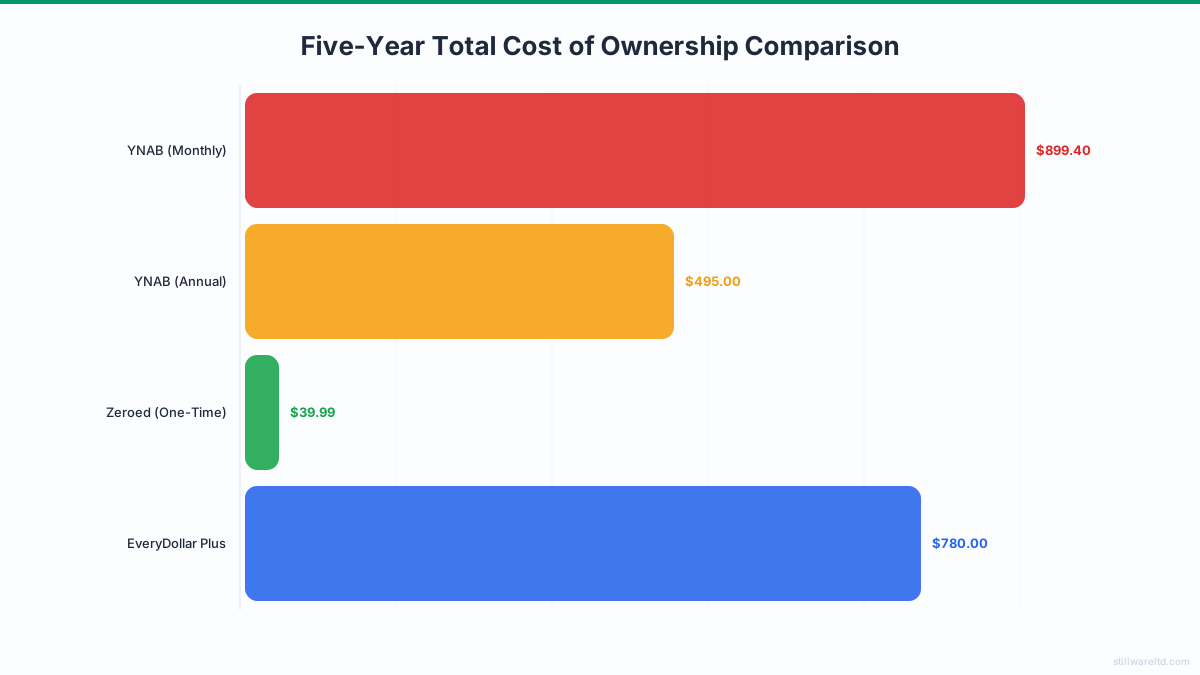
The chart tells a brutal story. The subscription model, by design, extracts maximum value over time. It’s a brilliant business model for the company, turning a utility into a recurring revenue stream. For the user, it transforms a budgeting tool from a capital expense into an operational one—a forever line-item in the very budget it’s supposed to help manage.
The average YNAB subscriber will spend over $450 more in five years than the cost of a high-quality, one-time purchase alternative. That’s not a software fee; it’s a data-hosting tax.
This isn’t an indictment of YNAB’s value. For many, the automated bank import via Plaid is worth the fee. But it’s critical to separate the cost of the methodology from the cost of the infrastructure. The envelope system is a set of ideas. The cloud servers, sync engines, and bank API integrations are what you’re actually renting. If you don’t need that rented infrastructure, why are you paying for it every month?
The subscription price is a direct reflection of the cloud architecture you’re funding, not the budgeting wisdom you’re accessing.
Architecture Showdown: Cloud Tenant vs. Local Owner
This is where the YNAB alternative no subscription conversation gets real. The difference between YNAB and a local-first alternative isn’t just a checkbox for “offline mode.” It’s a foundational difference in where your data lives and who controls the gateway.
YNAB’s model is cloud-centric. Your budget data resides on their servers. Your bank transactions (if you use import) flow through Plaid’s API. Your access is mediated by your account credentials. This creates convenience but also creates dependencies. No YNAB servers? No budget. Plaid has an outage? No imports. You stop paying? No access to your historical data.
Local-first apps like Zeroed flip this model. Your budget database exists primarily on your device. It’s a file you own. If you want to sync between your phone and laptop, you use your own Google Drive as a transfer medium—not as a primary storage hub. The app encrypts the data before it leaves your device, and only your other devices, with the key you hold, can decrypt it. Learn more about How Zeroed Encrypts Your Data Without a Server.

We built Zeroed to work fully offline because the budgeting process often happens in moments of reflection—on a commute without signal, at a kitchen table with spotty Wi-Fi, or when you simply want a distraction-free environment. The constraint of manual entry became the feature of deliberate awareness. Every transaction you log manually forces a moment of recognition, turning budgeting from a passive background sync into an active mindfulness practice.
When we tested early versions against cloud-dependent apps, the difference wasn’t just in connectivity. It was in perceived speed. A chart generated from data on your device’s SSD renders instantly. There’s no round-trip to a server, no waiting for a database query. The interface feels immediate because it is.
Feature-by-Feature: What You Gain, What You Trade
Let’s be honest: if you need fully automated bank syncing, a local-only app isn’t for you. That’s the trade-off. But that single trade-off unlocks a cascade of other benefits. Here’s how the core features stack up.
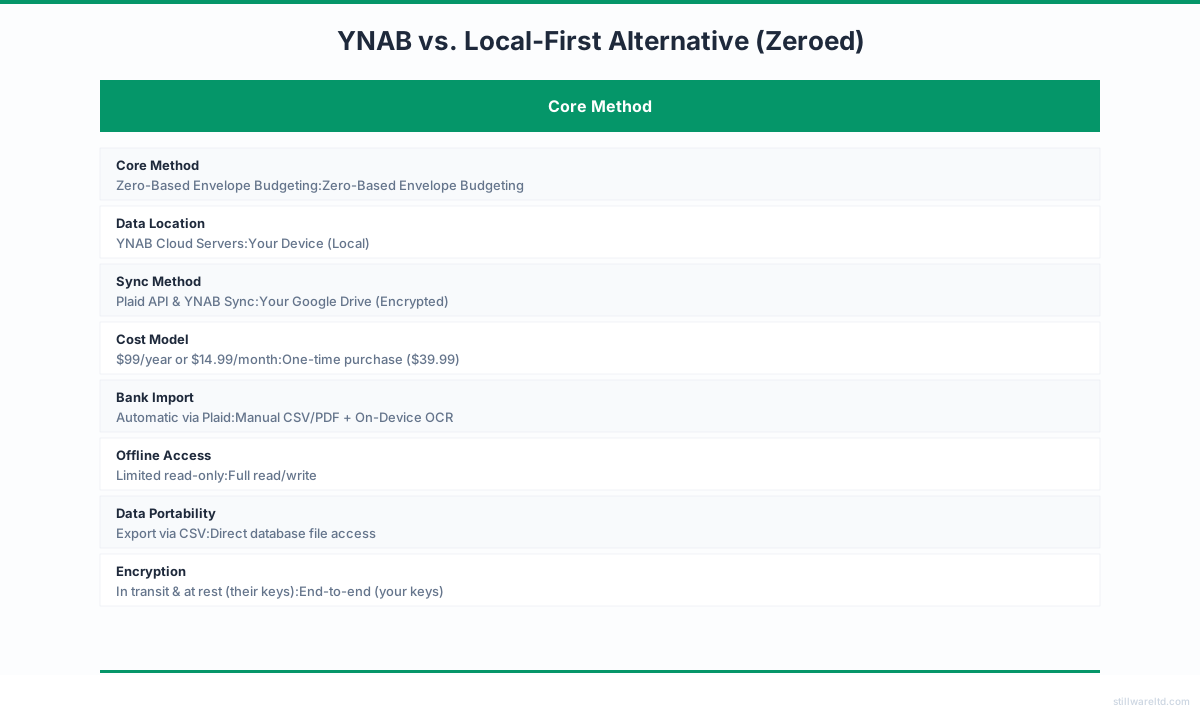
The table reveals the true nature of the choice. It’s not “which app has more features?” It’s “which set of constraints and freedoms align with your priorities?”
- The Manual Entry Hurdle: YNAB wins on automation. Plaid import is a massive time-saver. Local-first alternatives counter with tools to reduce the friction of manual entry. For example, Zeroed includes a powerful on-device OCR scanner for receipts. You take a photo, the text is extracted locally (no image sent to the cloud), and you can quickly populate a transaction. It also has a universal CSV/PDF parser for bank statements. It’s not automatic, but it’s a 30-second process instead of a 30-minute one.
- The Ownership Advantage: This is the local-first knockout punch. Your data is a file on your device. You can back it up anywhere—Dropbox, a USB drive, your NAS. You can open it in five years without worrying if the company is still in business or if your subscription lapsed. You own the artifact of your financial journey, not just temporary access to it. This is the single most common reason users give for switching after experiencing a subscription service shutdown.
- The Privacy Floor: With YNAB, you must trust their security and their privacy policy. With a local-first app, the privacy model is physical: the data never leaves your possession in an unencrypted form. We chose this model not because we’re paranoid, but because we believe your spending habits are nobody’s business—not even ours. When we encrypt data for Google Drive sync in Zeroed, we use keys derived from your device. We literally cannot decrypt your budget, even if we wanted to.
The most common request we get for Zeroed is, “Can you add Plaid support?” We always say no, and not for technical reasons. Adding Plaid would fundamentally change the architecture, requiring us to handle your bank credentials and store transaction data on intermediary servers. It would break the “zero trust” promise. That trade-off—convenience for absolute data sovereignty—is the line we won’t cross.
Beyond Zeroed: The Landscape of One-Time Purchase Budgeting
Zeroed isn’t the only player here. It’s part of a small but growing movement rejecting the subscription model for personal tools. It’s worth looking at the field to understand your options.
- Buckets: A fantastic, straightforward envelope budgeting app with a one-time purchase model. It’s simple, effective, and the developer is transparent and responsive. It’s a great choice if you want a pure, no-frills envelope experience.
- Actual Budget: An open-source envelope budgeter that you can self-host or use via their paid sync service. This is for the technical user who wants ultimate control. The self-hosted version is free, but you’re responsible for maintaining the server.
- Spreadsheets (Templates): The original one-time purchase tool. YNAB itself started as a spreadsheet template. Tools like Tiller Money supercharge spreadsheets with automated feeds, though Tiller is itself a subscription.
Where does Zeroed fit? We built it for the user who wants the rigor and privacy of a local-first system, but with a polished, native app experience that includes modern conveniences like receipt scanning and data visualization. We benchmarked against these alternatives and aimed for a middle ground: the ownership model of a spreadsheet, with the curated experience of a dedicated app, and a privacy stance stricter than all of them.
If your priority is automation above all, stick with YNAB. If you want absolute simplicity and a great one-time price, try Buckets. If you want to own your data completely and don’t mind manual entry aided by smart tools, that’s where Zeroed lives.

Making the Switch: A Practical Migration Path
Switching budget apps feels daunting. Your budget history is precious. Here’s a sane path from a subscription cloud app to a local-first system, using the envelope method as your constant.
- Export Everything: From your current app (YNAB, Mint, etc.), export all your transactions to CSV. This is your historical archive.
- Start Fresh, But Informed: In your new local app, don’t try to perfectly recreate every past category. Set up your budget envelope structure based on your current priorities and known bills. Use your old data as a reference for planning, not a blueprint to replicate.
- Adopt the New Workflow: This is the crucial step. If you’re moving to a manual-entry app, build the habit. Dedicate 2 minutes each evening to log the day’s spending. Use the app’s tools—like Zeroed’s receipt scanner—to batch-process transactions from a shopping trip.
- Let Go of Perfect History: Your net worth graph will have a cliff-edge at the migration point. That’s okay. The value is in forward-looking control, not a perfect historical record trapped in a subscription service. Your old CSV export is your archive if you ever need to look back.
The mental shift is from passive synchronization to active curation. It’s more work. But that’s the point. The engagement is what makes the method stick. The friction of manual entry is the cognitive speed bump that makes you question an impulse buy.
Your Data, Your Rules: The Unspoken Benefit of Local Storage
There’s a final, subtle advantage to local-first that goes beyond money or privacy. It’s about longevity and resilience.
Cloud services shut down. Companies pivot. APIs get deprecated. When you rely on a service, you’re betting that their business will outlast your need for the tool. When you own a local app, you own a working tool for as long as the operating system supports it. Even if Stillware vanished tomorrow, the Zeroed app on your phone would continue to function. Your data would remain. You could still budget.
This isn’t a hypothetical. Look at the graveyard of personal finance apps: Mint, Level Money, BillGuard. Users were left scrambling, often with limited ability to retrieve their data. A local-first app can’t be “sunsetted” in the same way. The software and the data are in your custody.
We built Zeroed after watching this cycle repeat. The subscription model incentivizes growth, acquisition, and sometimes, abrupt closure. The one-time purchase model incentivizes building something durable that people rely on for decades. Our goal isn’t to lock you in with a subscription, but to build something so useful you’ll choose to keep it. This is the core of Why We Don’t Do Subscriptions.
Ready to stop renting your budget and start owning it? The financial and philosophical case for a one-time purchase is clear. You can try Zeroed free for 34 days with every feature unlocked—no credit card, no obligation. See if the local-first, manual-entry approach gives you the control and clarity you’re looking for, without adding another forever bill to your monthly spreadsheet. Get started today and own your financial data for good.