
The Hidden Cost of “Free” Business Tools
Picture this: you’ve just finished a weekend of mowing lawns, and you’re ready to send out your invoices. You pull out your phone, open a free online invoice generator, and type in your client’s details. As you hit “create,” a banner ad for a lawnmower sale flashes across the screen. You dismiss it, but a nagging thought hits you: where is this invoice data going? Who owns the list of your clients and what you charge them? The moment you rely on a free online tool, you’ve already made your first business concession: trading your operational data for convenience. For a teen starting a side hustle, this trade-off isn’t just theoretical—it’s the foundation of a fragile business.
The search for teen side hustle tools offline isn’t about rejecting technology; it’s about demanding tools that serve you, not a corporation’s data-hungry business model. After researching dozens of business apps, one pattern stands out: they assume constant connectivity and treat your customer list as a potential revenue stream for them. We believe business tools should work offline by default. Here’s why. An offline-first suite isn’t a limitation; it’s your first line of defense, ensuring your client contacts, pricing strategies, and financial records remain yours alone, accessible whether you’re in a basement workshop or a driveway with spotty service.

5 Reasons Offline Tools Are Essential for Your Hustle
Your side hustle exists in the physical world. You’re tutoring in a library, walking dogs in a park, fixing bikes in a garage, or selling art at a local fair. These are all connectivity dead zones. A tool that requires the internet to generate a simple invoice or check a client’s last service date isn’t a tool—it’s a liability.
Consider the concrete advantages of an offline-first system:
- Uninterrupted Workflow: Create estimates, log expenses, and update inventory from anywhere. No waiting for a page to load or losing work because of a dropped signal.
- Complete Data Control: Your business data—the “who,” “what,” and “how much”—is the core asset of your hustle. Storing it locally means you, and only you, decide its fate.
- Professionalism Under Pressure: Need to adjust a quote on the spot for a potential client? An offline app lets you calculate costs and present a polished PDF immediately, without fumbling for Wi-Fi.
- Reduced Distraction: An app that doesn’t connect to the internet is an app that can’t ping you with social media notifications or display ads. Your focus becomes a tangible business advantage.
- No Subscription Lock-in: You own the software. There’s no monthly fee that turns your profit into their revenue.
Most business apps share a troubling assumption: that user data is a byproduct to be collected, not an asset to be protected. They are built for the cloud because the cloud benefits them, enabling data aggregation and user lock-in. For a solo entrepreneur, especially a teen building something from scratch, this architecture works against your interests.
The Real Cost of “Free” vs. Owning Your Tools
The allure of “free” is powerful, but in the business tool space, it’s almost always a mirage. You pay with your data, your attention, or eventually, your wallet. The subscription model for professional tools creates a recurring tax on your productivity, often layering on features you don’t need.
Let’s break down the real cost of a “professional” suite over just two years of a successful side hustle:
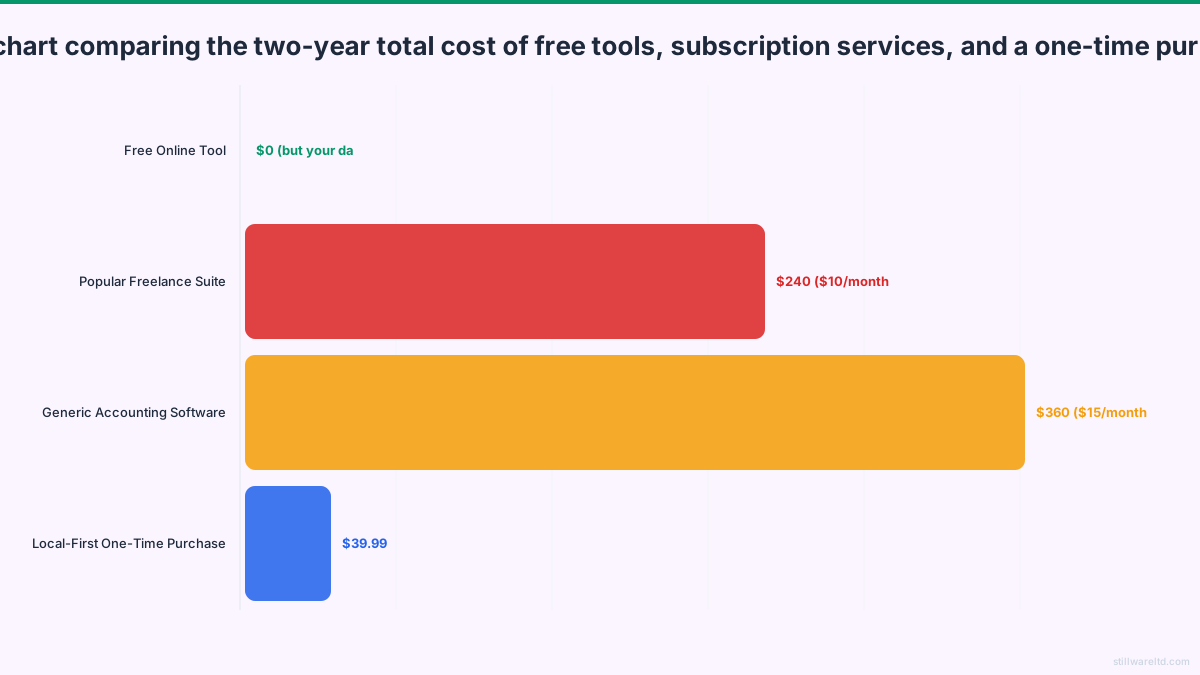
The financial argument is clear, but the operational one is sharper. A bloated subscription service designed for a small corporation will overwhelm a one-person operation. You need a focused toolkit: a way to track who owes you money, what you’ve spent, and what tasks are pending. Nothing more, nothing less.
This lean approach isn’t about having less—it’s about owning more. You own the software outright, and you own every byte of data it helps you create. There’s no risk of a feature you depend on being moved to a higher pricing tier or the service shutting down because it wasn’t profitable enough for its venture capital backers.
The 3-Part Offline Toolkit Every Teen Hustle Needs
Forget the 50-feature dashboards. A self-contained, offline business ledger needs to handle three fundamental jobs. Getting these right matters more than any flashy cloud-based analytics.
- Client & Job Tracker (Your Digital Rolodex): A simple, searchable list to record client names, contact info, service history, and notes. This replaces a scattered collection of text messages and paper notes.
- Invoice & Estimate Generator: A template system to create professional, branded PDFs you can email or print directly from your device. It should calculate totals, track payment status (Paid/Unpaid), and log the date.
- Expense & Inventory Ledger: A basic log for material costs, mileage, or other business expenses. If you sell physical goods, a simple inventory count that deducts as you invoice.
This toolkit turns reactive hustle into a managed operation. The magic isn’t in syncing to the cloud; it’s in having immediate, private access to your entire business state. When a repeat customer calls, you can pull up their history in seconds. When tax season arrives, you have a clear log of income and expenses instead of a year’s worth of bank statements to decipher.

4 Common Teen Hustle Pitfalls (And How Offline Tools Fix Them)
Most new entrepreneurs, teens included, make predictable mistakes. An offline, ownership-focused approach inherently steers you clear of the biggest ones.
- Pitfall 1: Mixing Personal and Business Finances. Using your personal Venmo for business payments is a mess waiting to happen. An offline ledger forces you to log transactions separately, creating clean records from day one.
- Pitfall 2: Underpricing Your Work. Without tracking time and material costs, you’re guessing. A local expense tracker provides the hard data you need to set profitable rates.
- Pitfall 3: Losing Client History. Relying on memory or scattered texts means forgetting preferences or repeating mistakes. A local CRM is your institutional memory.
- Pitfall 4: Building on Borrowed Land. Using a free platform that can change its rules, display your client data in ads, or shut down puts your hustle at risk. A local tool ensures your business’s foundation is built on ground you control.
The philosophy here is one of resilience. Your business data should be as portable and durable as a paper notebook, but with the power of digital search and calculation. It shouldn’t vanish if a SaaS startup fails or if you can’t afford next month’s subscription.
How to Scale Your Hustle with Data You Own
A well-organized local ledger does more than manage today’s tasks; it provides the data to make smarter decisions tomorrow. Because you own the information, you can analyze it on your terms.
- Identify Your Best Clients: Who provides repeat business? Who pays promptly? Your local history tells you where to focus your energy.
- Track Seasonal Trends: Did lawn mowing peak in June? Did tutoring requests spike before exams? Spotting patterns helps you plan and market effectively.
- Calculate Real Profit: Subtract your logged material costs from your income to see your actual take-home pay, not just revenue.
This is the opposite of the typical app model. Your data isn’t a resource for others; it’s your proprietary business intelligence. During development of local-first tools, we tested this against cloud alternatives. The sense of agency that comes from knowing your operational core is independent and secure is a competitive advantage in itself.
The most powerful feature a business tool can offer isn’t AI forecasting or real-time collaboration—it’s the guarantee that the tool, and the data within it, will be there for you when you need it, on your terms.

Why Your Teen Side Hustle Tools Offline Are a Smart Investment
Starting a side hustle as a teen is one of the most effective ways to learn real-world skills: sales, customer service, finance, and self-reliance. The tools you choose should reinforce those lessons, not undermine them. Choosing offline tools is a declaration of independence. It says your hustle’s success is built on your effort and your relationships, not on your willingness to rent software or trade private data for features.
The goal is to build something that lasts, on a foundation you own. This means selecting tools that prioritize your autonomy, protect your data, and work as hard as you do—wherever you are. It’s about professionalizing your operation from the first invoice, not with complex software, but with the right software.
Ready to build your hustle on your own terms? The first step is choosing tools that put you in control. Start by auditing your current process. Are you using any “free” tools that might be selling your client list? Could you operate for a day without internet? Try it. You might discover that the best teen side hustle tools offline are the ones that give you back your independence, your data, and your focus. For more on building a resilient business, check out our guide on how to build a budget you actually own. Give it a try and see how a local-first approach transforms your side hustle from a casual job into a real business. If you’re ready to ditch subscriptions, try Zeroed free for 34 days—a one-time purchase budgeting app that works entirely offline.
Try Zeroed Free — Own Your Budget, No Subscription
Try Zeroed Free