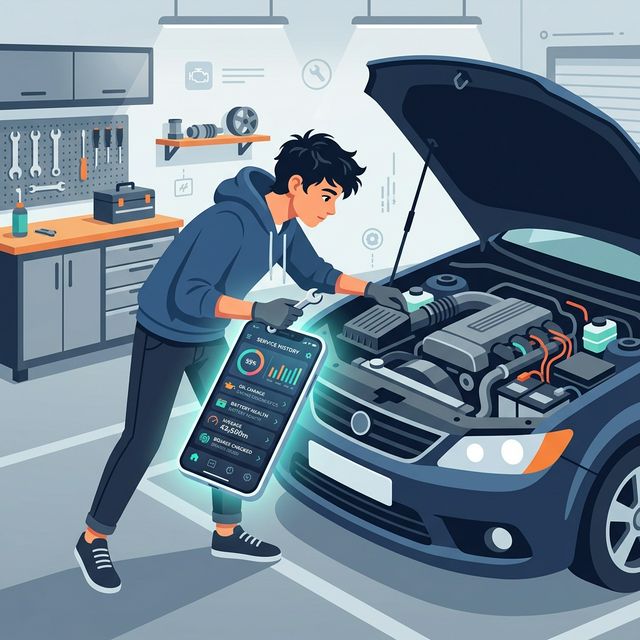
First Car Maintenance Guide for Teens: 7 Essential Steps to Avoid Breakdowns
By the end of this first car maintenance guide for teens, you’ll have a complete, actionable system for keeping your car running reliably. You’ll know exactly what to check, when to check it, and how to log everything to build a valuable history. This isn’t about becoming a mechanic—it’s about becoming a responsible owner who can spot trouble before it leaves you stranded.
The goal is to transform your car from a mystery box of noises and lights into a predictable machine you actually understand.
The Core Problem: Your Car’s History Vanishes When You Need It
You’re on a road trip when the check engine light flickers on. You search for that note about the last oil change, but it’s buried in your phone behind memes and school assignments. The manufacturer’s app needs a login you forgot and requires data to even open. You’re left guessing.
This isn’t a memory failure—it’s a system failure. Most car maintenance tools assume you’re always online and will never change phones. They treat your maintenance history as a temporary note, not a permanent asset you own.
We researched dozens of automotive apps and found one disturbing pattern: they’re built as services, not tools. Your logbook lives on a company’s server. If you sell the car, that history doesn’t go with it. If the app shuts down, your records vanish. Your car’s story gets deleted because a startup failed.
“Your car’s data is most critical when you’re under it, in a parking lot, or on the side of the road—places where cell service is notoriously absent. A maintenance log that needs internet is like a paper map that requires Wi-Fi.”

The 5 Non-Negotiable Monthly Checks for Your First Car
Think of these as your car’s vital signs. Checking them takes five minutes and reveals more about your car’s health than any dashboard warning light.
Here’s your monthly maintenance checklist:
- Engine Oil: Your engine’s lifeblood. Check monthly when the engine is cold on level ground. Pull the dipstick, wipe clean, reinsert fully, then read. Oil should be between the two marks and amber/brown in color.
- Tire Pressure & Tread: Under-inflated tires wear faster and hurt fuel economy. Check pressure when tires are cold using the PSI on your driver’s door jamb sticker. For tread, use the penny test.
- Coolant Level: Find the translucent plastic reservoir. The level should be between MIN and MAX lines when the engine is cool. Never open the radiator cap when hot.
- Brake Fluid: Check the marked reservoir. Consistently low levels indicate a potential safety leak.
- Windshield Washer Fluid: Top up regularly with winter-grade fluid that won’t freeze.
Logging these checks creates powerful data patterns. A note saying “Oil low, added 0.5qt on May 15” is useful. A pattern of adding oil every month points to a leak or burning issue—something to address before engine damage occurs.

How to Build a Bulletproof Digital Maintenance Log
The mistake isn’t failing to track—it’s tracking in fragile ways. A notes app entry titled “car stuff” from six months ago is useless. A spreadsheet on a rarely-opened laptop might as well not exist. You need a system that lives where the work happens: in your pocket, next to the car.
A proper log has two components: scheduled maintenance and a history of everything done.
Scheduled Maintenance (The Plan): This is your car’s manual translated into a calendar:
- Oil & Filter Change: Every 5,000 miles or 6 months
- Tire Rotation: Every 7,500 miles
- Cabin Air Filter: Every 15,000 miles or 1 year
- Engine Air Filter: Every 30,000 miles
- Brake Fluid Flush: Every 2-3 years
- Coolant Flush: Every 5 years or 60,000 miles
Maintenance History (The Proof): This is your car’s resume. Every entry needs:
- Date & Odometer Reading
- Service Performed
- Parts Used (brand, type, quantity)
- Cost (parts and labor)
- Receipt Photo (always take one)
This history log isn’t just for you—it’s the most persuasive document for the next buyer. A car with meticulous, verifiable service history is worth hundreds, sometimes thousands more than an identical car with “regular maintenance, I promise.”

Seasonal Survival Checklist: Winter and Summer Prep
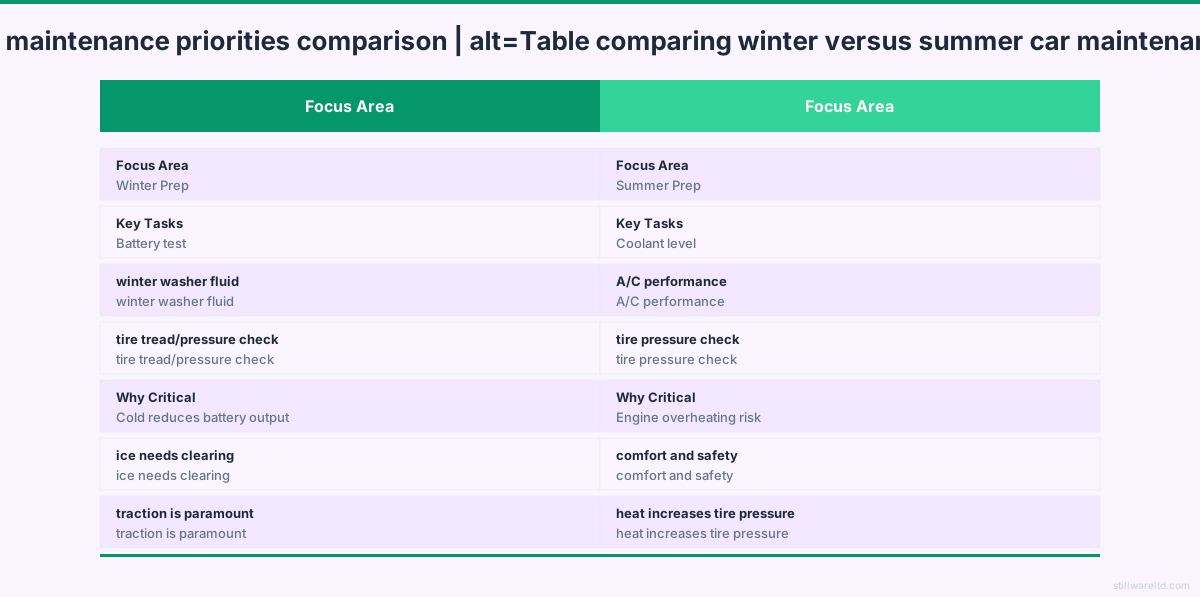
Cars hate extreme weather. These proactive checks before summer heat and winter cold prevent the most common season-related breakdowns.
Pre-Winter Checklist (before first freeze):
- Battery Test: Cold reduces battery capacity. Get free load tests at auto parts stores.
- Tire Check: Ensure adequate tread on all-season tires. Consider winter tires for snow areas.
- Washer Fluid: Switch to winter-grade fluid with lower freezing point.
- Coolant Strength: Verify 50/50 mix protects to your lowest expected temperatures.
- Wiper Blades: Replace worn blades before ice destroys brittle rubber.
Pre-Summer Checklist (before first heat wave):
- Cooling System: Check coolant level and condition. Inspect radiator hoses for cracks.
- Air Conditioning: Test early—spring repairs cost less than July emergencies.
- Tire Pressure: Heat increases pressure. Adjust to door-jamb spec when tires are cool.
- Engine Air Filter: Clean filter helps engine breathe in thin, hot air.
Keeping a seasonal log section helps you remember these tasks year after year. Did you replace wipers in November 2023? Your log will remind you for November 2024.
Fuel Economy Tracking: Your Car’s Diagnostic Dashboard
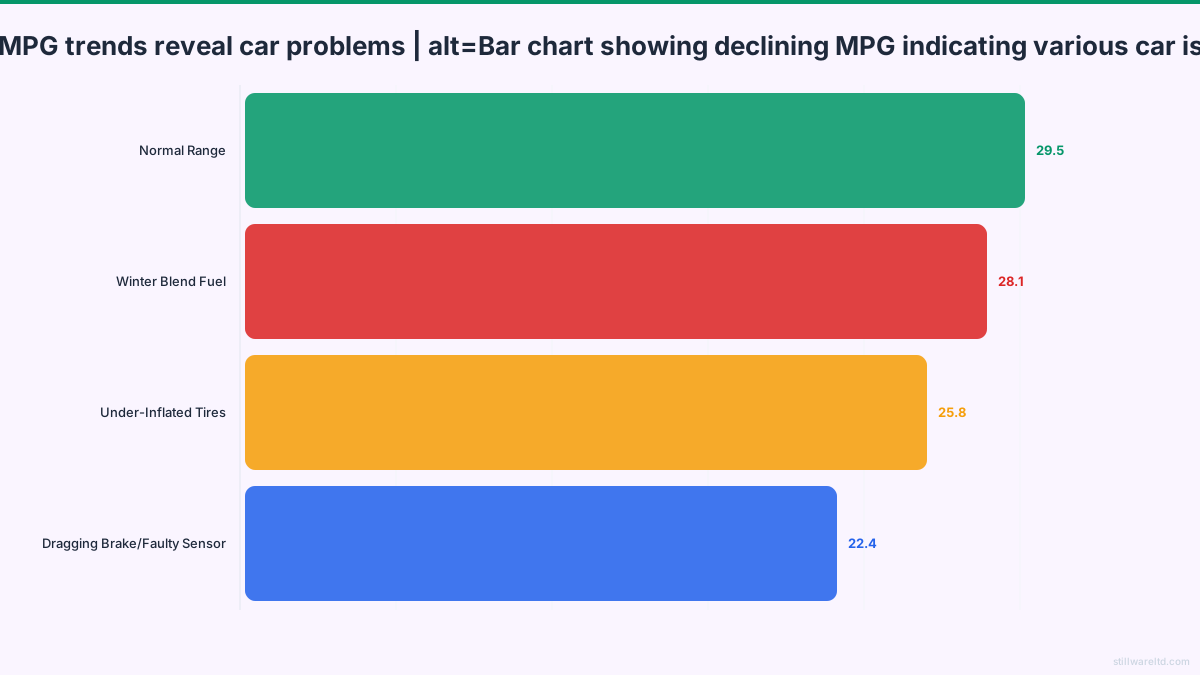
Mileage logging isn’t about pinching gas pennies. It’s a diagnostic tool. A sudden, unexplained MPG drop is often your car’s first symptom of trouble.
The manual method that beats automatic trackers:
- Fill up completely until nozzle clicks off automatically
- Reset your trip odometer to zero
- Drive normally until next fill-up
- Fill up completely again, noting gallons used
- Calculate: Miles Driven ÷ Gallons Used = MPG
Example: 312 miles ÷ 10.5 gallons = 29.7 MPG
Log this number every single time. After a few tanks, you’ll know your car’s normal range. If your next tank calculates to 24 MPG with no driving changes, it’s a red flag. Could be under-inflated tires, dragging brakes, failing oxygen sensor, or needed tune-up.
This manual process forces attention, turning a mindless chore into a meaningful vehicle check-in. Automated apps that pull vague estimates offer convenience at the cost of crucial awareness.
Building Your Offline Repair Library
You will face fixable problems: changing headlight bulbs, replacing cabin filters, jump-starting batteries. When that moment comes, you need the manual, not a shaky 4G connection.
Start building your car’s digital library now:
- Find Your Factory Service Manual: Search “[Your Car Year, Make, Model] factory service manual PDF”—these thousand-page guides mechanics use.
- Save Specific Repair Videos: When you find clear YouTube tutorials for your specific car, download them directly to your device.
- Organize by System: Create folders: “Engine,” “Brakes,” “Electrical,” “Interior.”
Having a 45-minute brake pad change video saved locally means following along in the driveway without burning data or losing the guide mid-job. This turns your phone from distraction into your most powerful tool.
5 Costly Maintenance Mistakes to Avoid
These shortcuts will cost you more in the long run:
- Ignoring Small Leaks: A few oil or coolant drops seem minor but are warnings. Find the source—a small, cheap gasket replacement now prevents catastrophic engine damage later.
- Using Wrong Fluids: Not all engine oil, coolant, or transmission fluid is the same. Using wrong types causes damage. Your owner’s manual specifies exactly what your car needs.
- Deferring Scheduled Maintenance: The 60,000-mile service isn’t a suggestion—it’s based on statistical failure rates of parts like timing belts. Skipping it because the car “feels fine” gambles with expensive odds.
- Trusting Memory Over Logs: You will forget dates, mileage, and oil brands. Write it down every time.
- Assuming Newer is Smarter: Cloud-connected apps promising “automatic tracking” often mean giving up privacy for features that break when you lose service or change phones.
The most sophisticated tool is worthless if it’s not where you need it, when you need it. A paper notebook in the glovebox beats the slickest cloud app that fails in concrete parking garages.
Your Next Steps: From Knowledge to System
Understanding what to do is step one. Building a failsafe system to do it consistently separates car owners from car caretakers.
Start this weekend with these three actions:
- Perform the five-minute vital signs check
- Fill up gas and calculate your first MPG reading
- Find and download your car’s service manual
Log all three actions with date and odometer. You’ve just begun.
The philosophy is simple: your car’s data is a physical asset, as real as the tires on the ground. It should be stored physically on your device, under your control. This isn’t just about maintenance—it’s about cultivating ownership and responsibility. The logbook proves that commitment.
Ready to build a system lasting as long as your car? The most reliable tools work for you, on your terms, with zero dependencies. Start your digital logbook today—your future self and your car’s future buyer will thank you. Give it a try this weekend and see how simple car maintenance can be when you have the right system.